
Staging Around the Wow Factor: What Do You Want Buyers to Notice First?
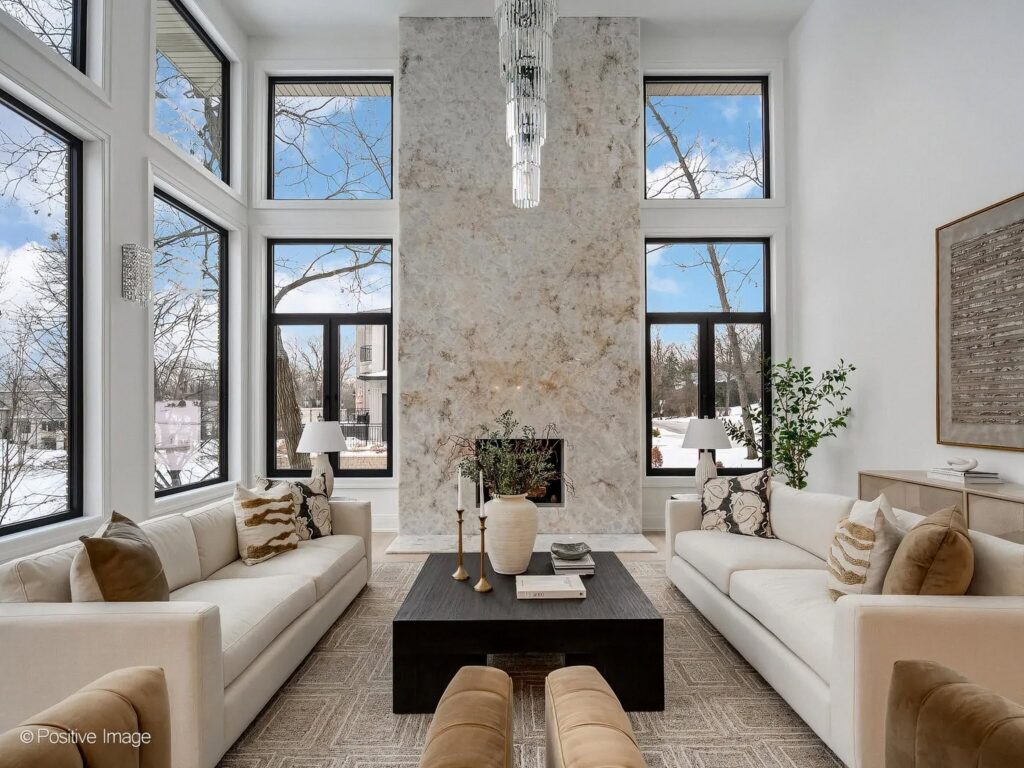
You already paid for the beautiful fireplace, oversized windows and upgraded kitchen. When it’s time to sell, make sure buyers actually notice them. Every home has features that deserve a little more attention. Maybe it’s a dramatic stone fireplace stretching toward a vaulted ceiling. Maybe it’s a wall of windows overlooking the backyard or an oversized kitchen island that immediately makes you picture Saturday morning pancakes and friends gathered around with a glass of wine. These are the details that can make a buyer stop, look around and remember a home after a day filled with showings.
Professional home staging isn’t about making every square foot demand equal attention. In fact, sometimes the opposite is true. Great staging helps establish a visual hierarchy within a room, identifying what buyers should notice first and using furniture, accessories, color, scale and placement to guide their eyes there naturally.
“Every room has something we want the buyer to notice,” says Margaret Gehr, founder of Chicagoland Home Staging. “Our job is to identify what that is and make sure the staging leads the eye there instead of competing with it.”
Start by Finding the Room’s “Hero”
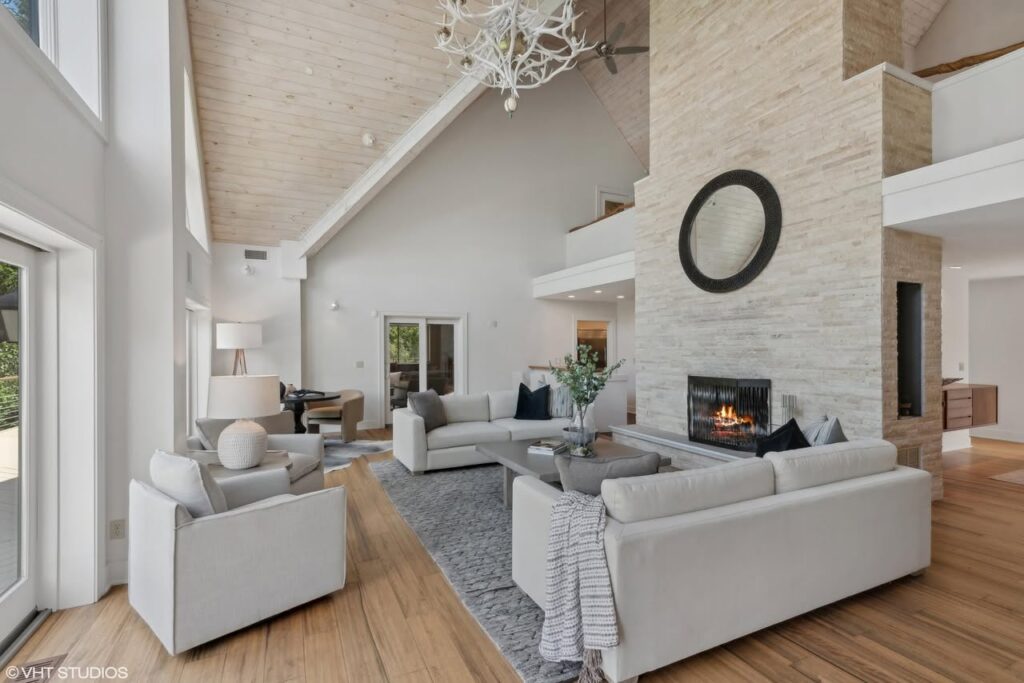
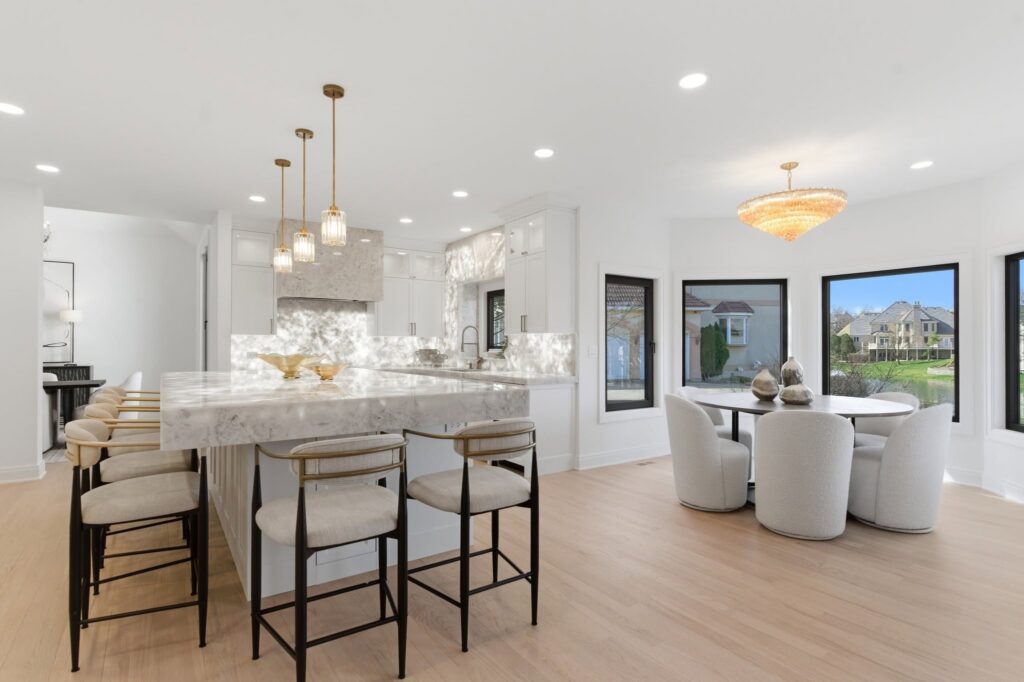
Before deciding where a sofa should go or which artwork belongs above it, ask a more important question: What is this room selling? In a kitchen, the answer may be a substantial island with beautiful stone. In a family room, it could be a fireplace. Another property may have soaring ceilings, unusually large windows, architectural stonework or a view that immediately separates it from other homes at the same price point.
Once you’ve identified that hero, the rest of the room should support it rather than fight for attention. That’s part of the strategy Chicagoland Home Staging brings to a property before staging begins. The CHS process starts by examining the home, identifying problem areas and space solutions and developing a plan for each space based on the home’s individual style, price point and potential buyer.
“We’re never just asking, ‘What would look pretty in this room?’” Gehr says. “We’re asking, ‘What are we selling in this room, and how can we make sure the buyer sees it?’”
Use Furniture to Point Buyers in the Right Direction
Furniture placement does much more than demonstrate that a sofa will fit in the living room. It influences how someone moves through a space, where they pause and where their attention lands. Look at a room with a dramatic fireplace, for example. Positioning the seating around that feature tells buyers almost instantly: This is where people gather. The fireplace becomes more than stone, tile and a firebox. It becomes the center of an experience.
The same thing happens around an oversized kitchen island. Properly scaled stools reinforce the island’s size and function without hiding it. A dining table near expansive windows can draw buyers toward the natural light and view. In a room with soaring ceilings, carefully selected furnishings can allow the eye to travel upward instead of visually cutting the space in half. CHS deliberately considers natural stopping places, sight lines and walking lanes as part of its staging process. Those details may not be things buyers consciously identify during a showing, but together they influence how easily someone understands and experiences the room.
Know When to Let the Architecture Do the Talking

One of the easiest staging mistakes is believing that an impressive room needs more impressive things added to it. Sometimes it needs less. If you have floor-to-ceiling windows, you probably don’t need competing artwork, oversized accessories and pops of color demanding attention nearby. If a fireplace already reaches dramatically toward a vaulted ceiling, the staging doesn’t need to manufacture another focal point six feet away.
“A buyer shouldn’t have to search for the wow factor,” says Kathy Lobkovich, co-owner of Chicagoland Home Staging. “Good staging makes sure they see it.”
That doesn’t mean a room has to feel empty or sterile. Look at the staged spaces shown here. The palettes are largely neutral, but texture comes through upholstery, pillows, natural wood, stone, greenery and carefully selected accessories. Contrast adds definition. The furnishings make the rooms feel finished while still leaving enough visual breathing room for the architecture to stand out. The result isn’t simply a prettier room. Buyers get a clearer picture of what makes the home special.
Remember That Buyers May See the Photo Before the Room
There’s another audience to consider before a buyer ever walks through the front door: the person scrolling through listing photos online. A home’s strongest features need to translate into photography, too. That can change staging decisions. Furniture that works perfectly well for everyday life may interrupt an important sight line in a photograph. An accessory that barely registers in person might suddenly become the first thing your eye notices on a screen. A room that feels spacious when you’re standing inside it can photograph as confusing if the furniture doesn’t clearly communicate how the space functions.
“When everything in a room is asking for attention, nothing really stands out,” Lobkovich says. “The goal is to give buyers enough to understand and connect with the space without distracting them from what makes the home special.”
For sellers who are still living in their homes, CHS offers hands-on staging using the homeowner’s existing belongings, rearranging furniture, artwork and accessories to showcase the property’s features. The team also photo-styles rooms with online listing photography in mind and can help select and source additional pieces when needed.
Not Every Room Needs the Same Staging Strategy
Staging is also about knowing where to concentrate attention and investment. Not every room needs the same amount of furniture, the same number of accessories or the same visual impact. Some spaces simply do more work in selling a property than others. For vacant homes, Chicagoland Home Staging begins with a preview to determine which rooms and areas should be staged for the greatest impact. For occupied homes, CHS offers an in-home consultation that provides a buyer’s-eye assessment and a room-by-room action plan, including what should be removed, moved or added and recommendations involving paint, lighting and other updates.
That changes the question from How do we decorate this house? to something much more strategic: What do we want buyers to notice, feel and remember about it?
Find Your Home’s Wow Factor
Take a walk through your home and pretend you’re seeing it for the first time. What would make you stop? What feature would you point out to someone visiting for the first time? When you stand at the entrance to the room, is your eye naturally drawn toward it, or is something else competing for your attention? You may not need more furniture, more accessories or more decorating. You may simply need a better strategy for showcasing what your home already has.
“Great staging isn’t about filling every space,” Lobkovich says. “It creates breathing room for buyers to imagine themselves there.”
Chicagoland Home Staging can help identify the features worth emphasizing and create a presentation around them. Whether you’re selling a vacant property or continuing to live in your home while it’s on the market, CHS offers vacant home staging, home staging consultations and hands-on staging for occupied homes. The company has served Chicago-area sellers for more than 15 years and reports more than 4,300 homes staged and sold.
Contact Chicagoland Home Staging today to schedule your property preview or in-home staging consultation and discover how customized home staging can help your home sell faster, stand out online and leave buyers talking long after the showing is over. Ready to stage smarter? Contact us today to schedule your staging consultation.